
01
Emissions
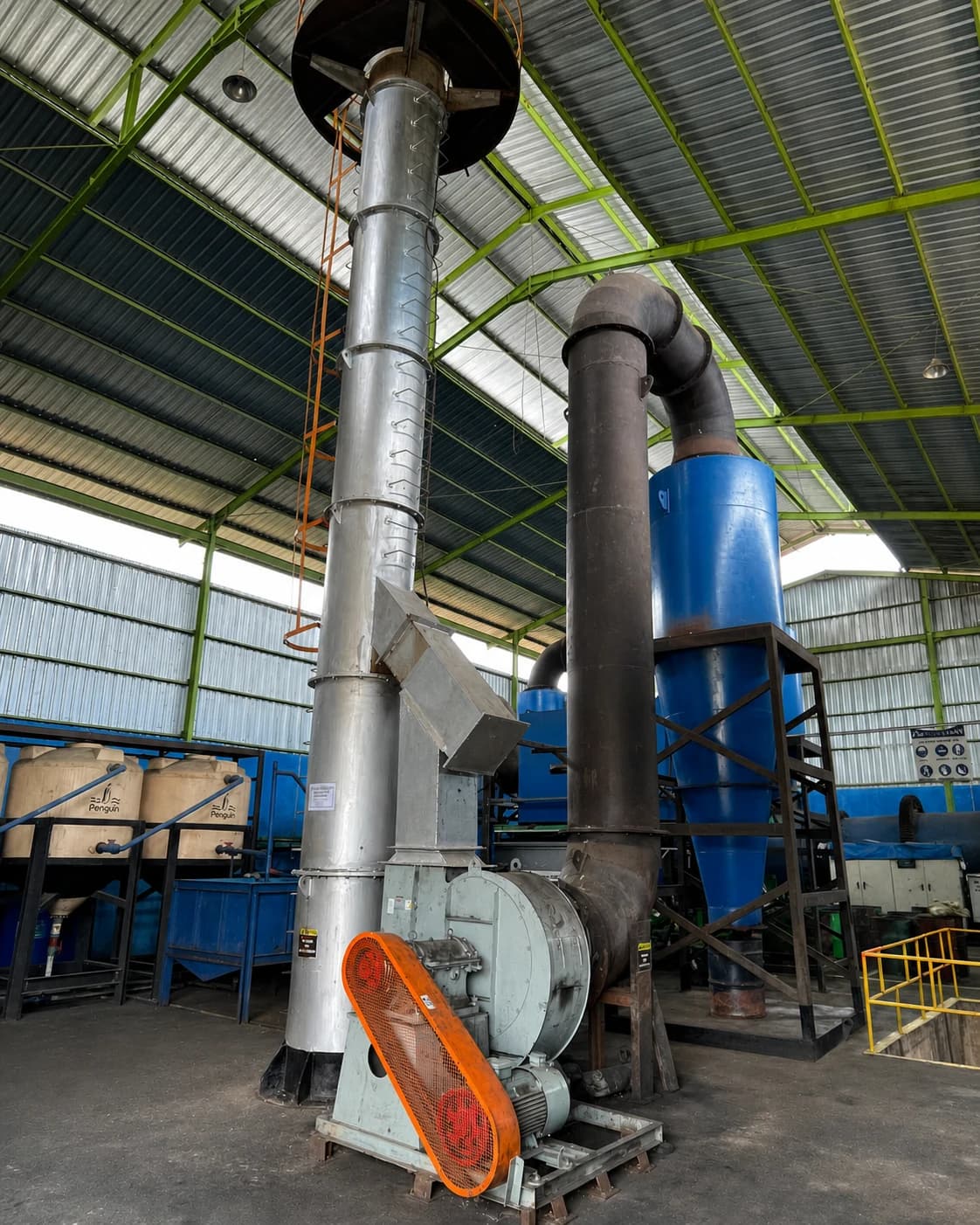
Two-stage combustion holds gas in the secondary chamber at 1,000–1,200 °C. Flue gas passes a cyclone and scrubber before release through the 30 m stack.
- Chamber temperature logged per batch
- Periodic stack testing per facility permit
Sustainability & OHS
Four things we watch every day at Blang Bintang: emissions, worker safety, residue and records.
01
Two-stage combustion holds gas in the secondary chamber at 1,000–1,200 °C. Flue gas passes a cyclone and scrubber before release through the 30 m stack.
02
The plant team includes an HSE/OHS officer and First Aid. Burning is done by two fixed crews so working hours and incinerator cool-down are respected.
03
Fly ash, bottom ash, flue-gas treatment residue and used rags go to a licensed B3 waste handler.
04
Every kilogram is recorded three times: on the electronic manifest, at the weighbridge and on the Certificate of Destruction.
Documentation
For hospitals
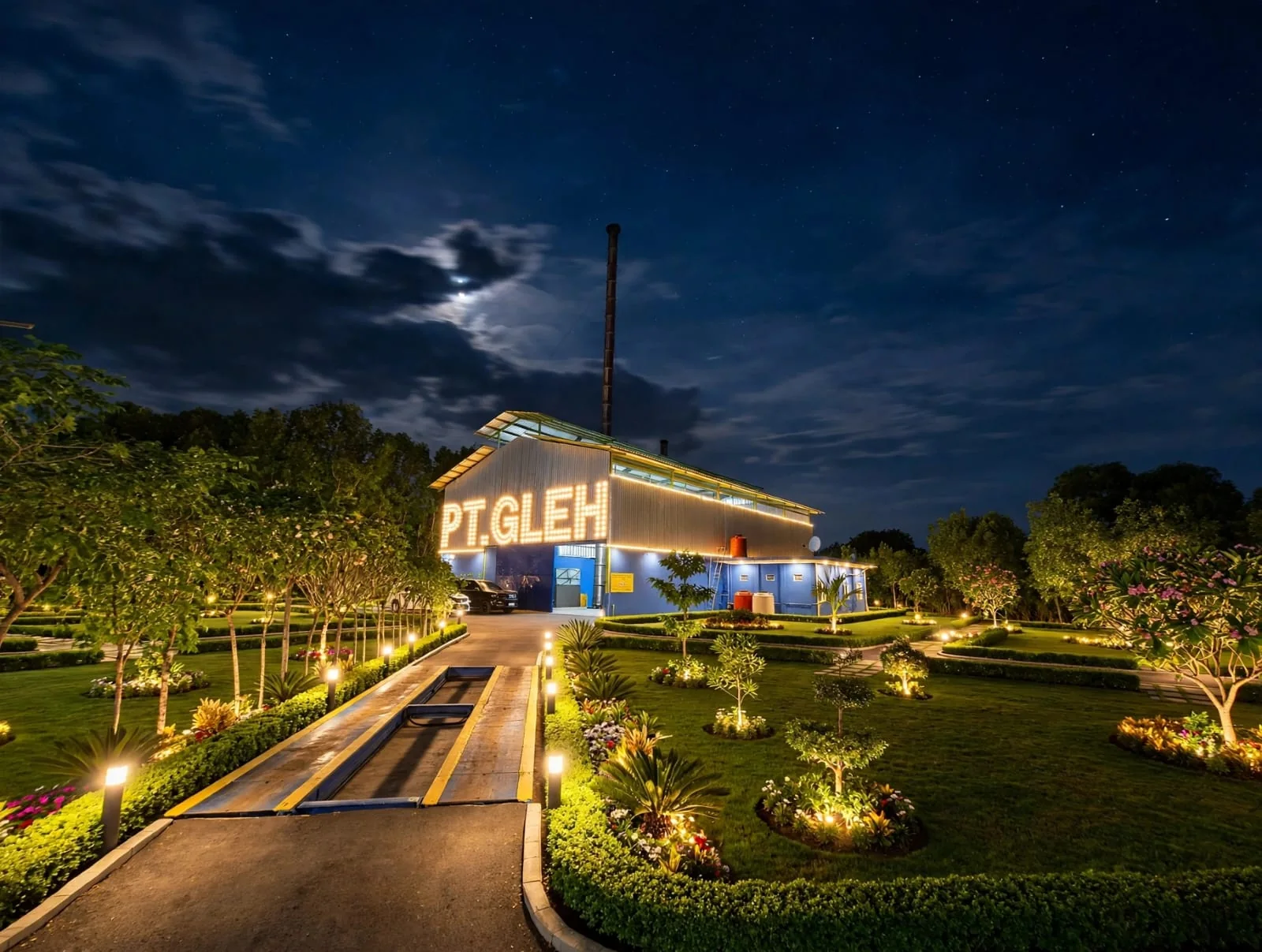
Visualisation of the Blang Bintang facility (not a documentary photo)